Source: @(AP Photo)
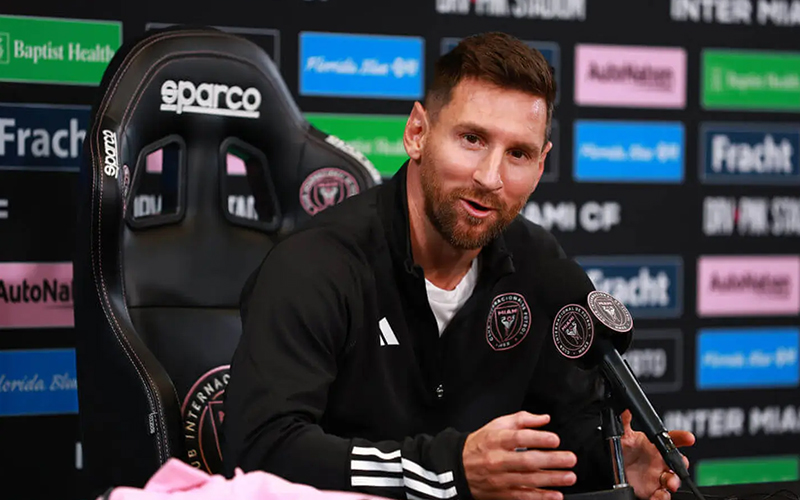
Lionel Messi is expanding his ownership portfolio in Spanish football, with second-division outfit CD Eldense confirming a preliminary agreement for the Argentine to become their majority shareholder. The move comes just months after Messi purchased Cornellà, and it marks his first foray into a fully professional Spanish club.
Eldense, based in the Alicante town of Elda, have endured a rough start to the campaign. Two points from four matches left them near the foot of the La Liga 2 table, and head coach Claudio Barragán was sacked earlier this week as pressure mounted. Whoever takes charge next will inherit a squad in transition, both on the pitch and in the boardroom.
The takeover, still pending due diligence and sign-off from Spain’s National Sports Council, would see Messi buy out Grupo TH Soluciones, the Colombian group that has run the club alongside sister sides in Colombia and Switzerland. Eldense’s own statement framed the deal as covering the shares held by Grupo TH, language that suggests the negotiations have moved well past the exploratory stage even as formalities remain outstanding.
WHY ELDENSE FITS MESSI’S GROWING INVESTMENT STRATEGY
What stands out here is not just the fee involved or the name attached to it, but the logic of building a network of Spanish clubs at different levels of the pyramid. Cornellà operates in the fifth tier as a semi-professional outfit rooted in Barcelona, the city where Messi made his name. Eldense sits three divisions higher, with a genuine route into the top flight should results turn around. Owning both gives Messi a foothold in two very different stages of Spanish football, from grassroots development to a club with promotion ambitions.
There is a regulatory wrinkle worth flagging. Spain’s football authorities generally will not permit one owner to hold majority stakes in two clubs competing in the same division, so a scenario where Cornellà climbs the leagues and threatens to meet Eldense would force some kind of restructuring. With three divisions currently separating the pair, that outcome remains distant, but it is one the league would have to address if both clubs kept rising together.
Founded in 1921, Eldense have spent most of their history outside Spain’s top two divisions. Their promotion to the second tier in 2023 ended a wait stretching back to 1964, and after being relegated in 2025, they returned to La Liga 2 this summer. That yo-yo history reflects a club that has long punched above its resources, and Messi’s backing, whatever else it brings, offers the kind of financial muscle Eldense have rarely enjoyed at this level.
Messi, 39, continues turning his focus toward ownership as his playing days wind down at Inter Miami. He also holds a stake alongside former Barcelona teammate Luis Suárez in Uruguayan side Deportivo LSM. Together, these investments point to a player thinking well beyond his final seasons on the pitch, building a footprint in the game that will outlast his playing career.