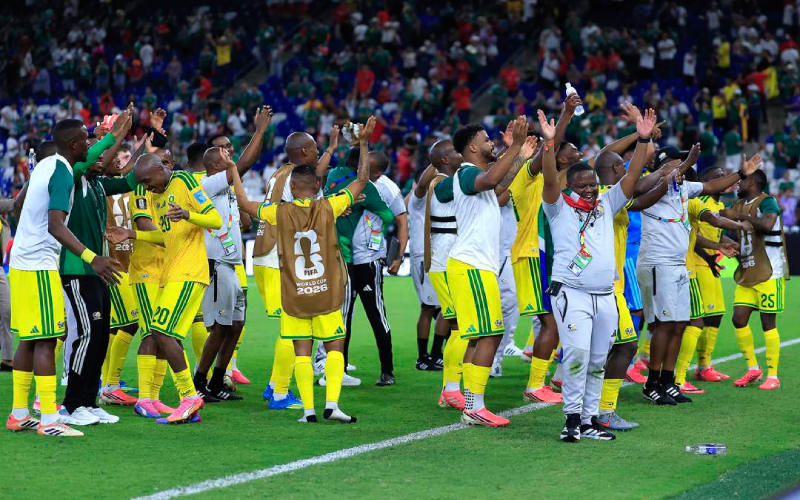
Hugo Broos and his Bafana Bafana players will be smiling all the way to the bank after the tournament. Source: @Alfredo Lopez/Jam Media/ Getty Images
The dust has finally settled on South Africa’s historic run at the FIFA World Cup. While Stephen Eustáquio’s 92nd-minute strike for Canada inflicted an agonising, heartbreaking exit in the Round of 32, the overarching feeling across Mzansi must transition from grief to profound optimism about the Hugo Broos era and what follows it. For a team that had not reached the knockout phase of a global tournament in its history, this campaign was not the end—it was a spectacular foundation.
The Hugo Broos Succession Question
The immediate question facing the South African Football Association (SAFA) is the technical leadership. With veteran manager Hugo Broos at 74 years old and hinting that this tournament could signal the twilight of his illustrious career, identifying his successor is priority number one. Broos has successfully shifted the culture of Bafana Bafana, moving away from short-sighted squad selections to blooding an energetic, fearless generation of talent. Maintaining this exact tactical continuity will be vital over the next twelve months.
Looking at the squad architecture, the future is incredibly bright. The tournament showcased the immense capabilities of a youthful core that will only mature as the next World Cup cycle approaches. Winger Thapelo Maseko, who etched his name into footballing folklore with his brilliant winner against South Korea, alongside dynamic talents like Relebohile Mofokeng and Oswin Appollis, proved they can thrive under maximum international pressure. Backed by the veteran leadership of captain Ronwen Williams, this side possesses the perfect blend of emerging star power and structural stability.
Over the next couple of years, fans can expect to see a highly competitive South Africa asserting its dominance on the continent. The immediate target on the horizon will be the upcoming Africa Cup of Nations (AFCON) qualifiers and the continuation of the continent’s internal tournament cycles. Having tasted the elite atmosphere of the global knockout stage, Bafana Bafana will no longer enter continental competitions merely hoping to compete—they will enter as distinct favourites.
Ultimately, the narrow loss in Los Angeles should be viewed as a necessary stepping stone. International football is a game of fine margins, and this young squad has just received the most valuable lesson of their careers. If SAFA handles the upcoming managerial transition with care and continues to invest heavily in domestic development, the next few years will not just see South Africa return to the world stage but actively command it.