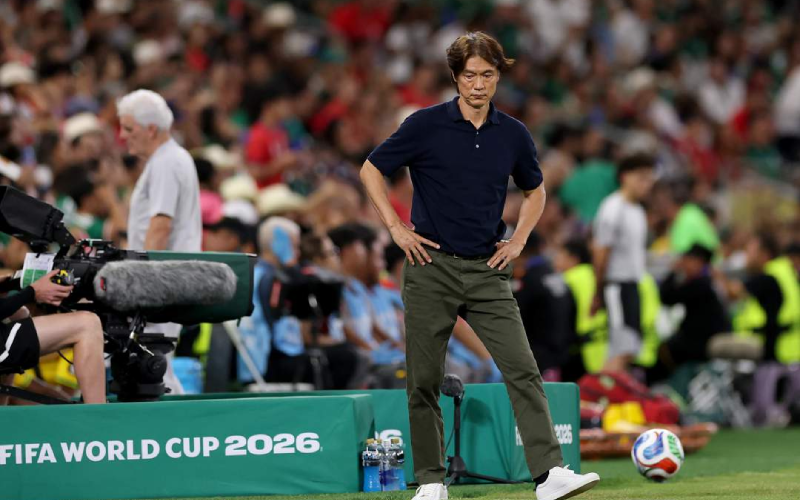
South Korea coach resigns: a dejected Hong Myung-bo during the 1-0 World Cup loss to South Africa in Guadalupe, Mexico. @Carl Recine/Getty image
The fallout from South Korea’s premature departure from the FIFA World Cup 2026 has begun in earnest: the South Korea coach resigns after a chastening group-stage exit. Following a highly disappointing campaign that culminated in a decisive, structural defeat to South Africa, the tactician announced his departure during a tense post-match press conference, accepting full accountability for the squad’s tactical shortcomings.
The Korean Football Association (KFA) confirmed the development through a formal statement, noting that the contract was terminated by mutual consent after the team failed to navigate their way into the newly expanded Round of 32 phase. Entering the tournament with immense expectations and a squad boasting elite European talent, the Asian giants looked a shadow of themselves, plagued by inconsistency and a distinct lack of cohesion in the final third.
Why the South Korea Coach Resigns
A heavily criticised tactical decision to bench star forward Son Heung-min during the definitive Group A encounter proved to be the final straw for fans and pundits back home. Although the manager introduced his captain in the second half in a desperate bid to salvage their tournament lives, the team could not break through a resolute South African low block. The subsequent 1-0 defeat sealed their fate, sparking massive public backlash regarding selection choices and overall identity.
With the qualification cycle for upcoming continental tournaments fast approaching, the KFA must now initiate an urgent search for a visionary successor. The immediate priority will be restoring psychological confidence to a deeply demoralised squad and rebuilding a system that maximizes their world-class attacking assets. For South Korea, this premature exit marks a painful period of introspection, while the federation targets a complete overhaul of its technical hierarchy.