Source: @AA.com
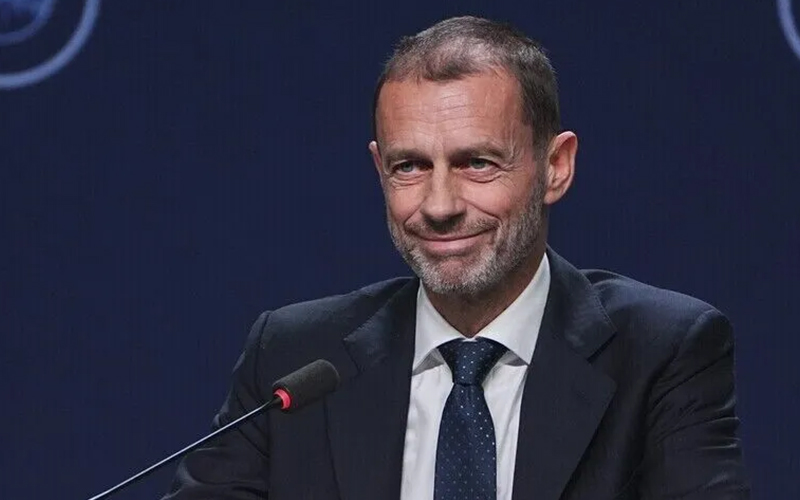
Aleksander Ceferin’s decision to seek a fourth term as UEFA president comes at a time when European football’s influence over the international game is being tested. The Slovenian lawyer had previously indicated that he would not stand again, but appeals from national associations have persuaded him to reconsider. His candidacy now offers European football continuity at a moment when relations with FIFA are under considerable strain.
Speaking to representatives of UEFA’s 55 member associations in Berlin on Thursday, Ceferin confirmed that he had agreed to their request to remain in office. The election will take place at UEFA’s 51st Ordinary Congress in Astana, Kazakhstan, on 22 April 2027.
Ceferin said his priorities remained the unity of European football, strengthening the game and preparing UEFA for the next generation. Those ambitions carry added relevance given the disputes over governance and commercial control that have intensified within international football.
Why Ceferin’s Continued Leadership Matters for UEFA
Ceferin’s presidency has already been defined by a major confrontation with powerful interests in the game. His opposition to the proposed European Super League placed UEFA at the centre of a battle over who should determine the future of elite club football. The dispute tested the authority of football’s governing institutions and exposed tensions between commercial ambition and the established European competition system.
That experience gives Ceferin a record of resisting initiatives that threaten UEFA’s authority. His next term, should he win re-election, would put him in a position to continue defending Europe’s interests in disputes over how international football is governed.
Relations with FIFA have become another defining issue. Gianni Infantino’s leadership has faced growing criticism over governance and the concentration of decision-making power. The proposed FIFA Forward Enterprise, a private equity-backed company intended to take over FIFA’s commercial rights, has added to those concerns, with opponents questioning the implications of transferring control of valuable football assets to a new corporate structure.
UEFA’s opposition places Ceferin at the centre of a broader dispute over accountability within world football. European associations have become an important source of resistance to Infantino’s leadership, while other confederations have also been drawn into disagreements over FIFA’s direction. The contest is not simply about personalities. It concerns how much influence national associations retain over decisions affecting the sport globally.
Ceferin’s position gives UEFA a recognisable leader as it presses for changes at FIFA. Replacing him at this stage could complicate efforts to maintain a united European position, although continuity alone cannot guarantee that UEFA will secure the reforms it wants. The challenge is to turn collective opposition into practical changes to governance.
A Fourth Term Would Keep the Pressure on FIFA
Ceferin has ruled out seeking the FIFA presidency in the election scheduled for March 2027, leaving his focus on UEFA rather than a direct bid to replace Infantino. That decision keeps the European governing body at the heart of the dispute instead of redirecting its leadership towards FIFA’s top job.
His decision to reconsider retirement also reflects the influence national associations can exert when they believe continuity is needed. Their backing suggests they regard his leadership as an asset in negotiations with FIFA, rather than a position that should automatically change hands after several terms.
However, UEFA’s ability to influence world football will depend on more than Ceferin remaining in office. European associations must maintain their unity, articulate specific governance demands and persuade other members of FIFA that reform serves the wider game. Winning that argument will require more than political opposition.