Source: @BBC
Senegal and Morocco left Lausanne on Thursday with nothing settled, and the 2025 AFCON final remains unresolved almost nine months after the whistle in Rabat. The closed-door hearing at the Court of Arbitration for Sport began around 9:30 and ended at 2:45 in the afternoon, slightly ahead of schedule. Senegal’s secretary general, Abdoulaye Sow, said his federation defended its case well, while the Moroccan delegation left without a word. CAS director general Matthieu Reeb has indicated a decision should follow within days, which would be unusually brisk for a dispute of this size.
The question the panel must answer
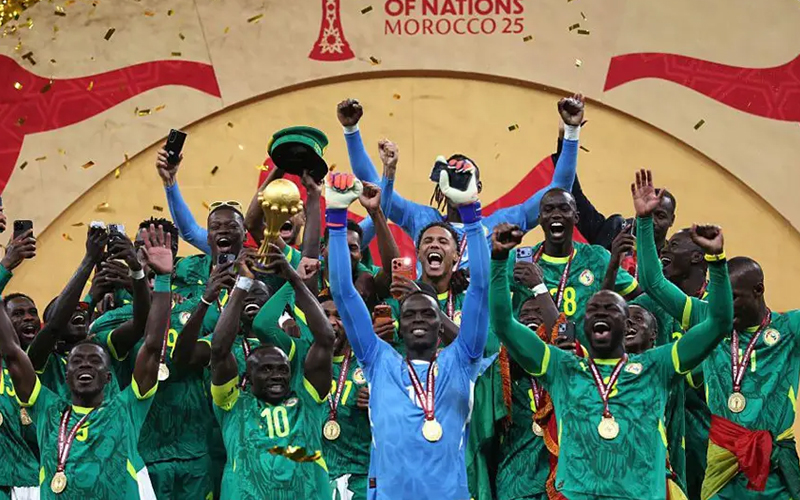
Strip away the noise and the legal issue is narrow. Senegal won the 2025 AFCON final 1-0 in extra time through Pape Gueye, after Édouard Mendy saved Brahim Díaz’s Panenka. In March, a CAF appeals panel converted that into a 3-0 win for Morocco, citing a tournament rule that a team leaving the field without the referee’s permission loses and is eliminated.
Senegal’s argument rests on Law 5.2, which makes the referee’s decisions on facts connected with play, including the result, final. Jean-Jacques Ndala had the power to abandon the match, which would have handed Morocco the trophy, and chose instead to restart it once the players returned. Sadio Mané’s role in bringing his team back is central to that argument, because it shows the protest ended on the pitch and under the referee’s control.
Morocco’s position is simpler. The regulation is explicit, the stoppage lasted around 15 minutes, and a protest of that kind is precisely what the rule was written to punish. The panel, chaired by Frenchman Gérald Simon, must decide whether a competition regulation can override a result the match official himself validated. With the ball now in the court of three arbitrators, either answer will set a precedent for how African football treats walk-offs.
The consequences reach beyond one trophy. If CAS upholds the CAF ruling, Senegal will have a bitter pill to swallow, and any future protest on the pitch would carry a price that is now beyond dispute. If it restores Senegal’s win, CAF’s appeals process will face hard questions, and so will the perception that Morocco, a 2030 World Cup co-host, holds growing influence in the game’s institutions. Senegal’s government has already called for an investigation into suspected corruption.
CAF president Patrice Motsepe has pledged to respect and implement whatever CAS decides. That promise will be tested soon, with the next tournament due in June 2027 in Kenya, Tanzania and Uganda. Morocco have waited since 1976 for the title, and Senegal believe they have already won it.