Source: @TCL
UEFA has opened another round of media rights sales for its three leading men’s club competitions, bringing Australia, New Zealand, Greece, Türkiye and five other markets into the bidding process for the 2027-31 cycle.
The latest UEFA tenders cover the Champions League, Europa League and Conference League for four seasons, from 2027/28 through to 2030/31. Bids are due by 3 November, giving incumbent broadcasters and potential challengers a defined window to compete for long-term access to European club football.
The nine markets are Australia, New Zealand, Türkiye, Greece, Israel, Cyprus, Malta, Iceland and the Caribbean. While they vary considerably in size and media structure, the package gives UEFA another sizeable block of territories to commercialise as it builds the next global rights cycle.
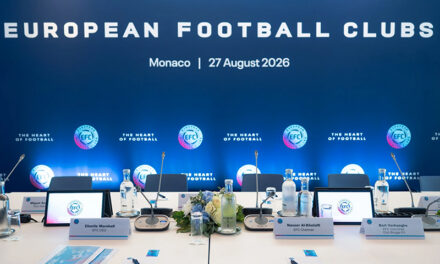
The process is being run by UC3, the joint venture between UEFA and European Football Clubs, with Relevent Football Partners handling the commercial sales mandate for UEFA’s men’s club competitions. Relevent’s agreement with UC3 covers the 2027-33 period and includes media, sponsorship and licensing rights.
Greece and Türkiye are the markets where the rights have the strongest connection between European competition and domestic football. AEK Athens, Fenerbahçe and Galatasaray are among the clubs competing in the 2026-27 Champions League, providing local broadcasters with teams that can anchor coverage rather than relying solely on the appeal of Europe’s biggest clubs.
The incumbent broadcasters also provide a useful indication of the competitive landscape. Cosmote and Mega currently hold the Greek rights, while TRT is the Turkish broadcaster. Nine Network is the Australian incumbent and DAZN holds the New Zealand rights. Israel, Cyprus, Malta and Iceland currently have The Sports Channel, Cyta, Melita, and Viaplay and Syn respectively, while Rush Sports covers the Caribbean.
The crucial question for bidders is therefore not simply whether Champions League matches attract viewers. It is whether the entire UEFA package can generate enough recurring value across subscriptions, advertising, distribution and premium sports positioning to justify a four-year commitment.
That calculation has become more complex as UEFA’s competitions operate under their newer league-phase formats. UEFA has itself linked the revamped competition structure with its broader commercial strategy, arguing that the format creates more meaningful fixtures across the schedule and greater commercial opportunities.