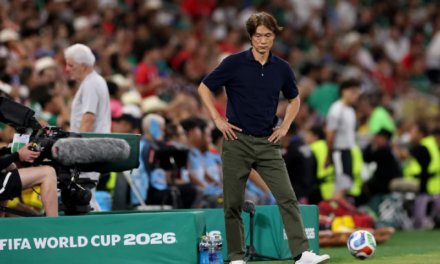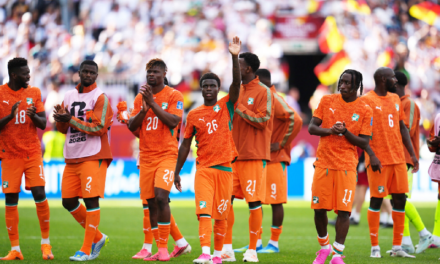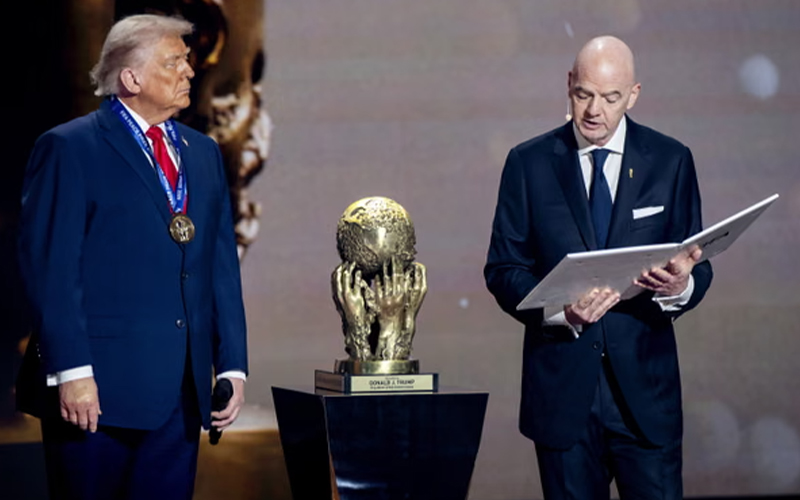
UEFA World Cup boycott: European football threatens to walk away from FIFA. (Source: AFP)
In an unprecedented escalation of football’s ongoing political civil war, UEFA has issued a staggering ultimatum to FIFA: abandon controversial plans to sell a stake in the sport’s most prestigious tournaments to private equity, or face a complete European boycott of the World Cup. This monumental threat has shaken the foundations of global football, setting the stage for a bitter legal and political battle between the sport’s two most powerful governing bodies.
At the heart of the conflict is a radical proposal from FIFA President Gianni Infantino to establish ‘FIFA Forward Enterprise’ (FFE). Valued at a breathtaking $20 billion, this new commercial subsidiary would manage flagship events, primarily the World Cup and the newly expanded Club World Cup. FIFA’s blueprint involves raising up to $4.2 billion by auctioning off minority stakes to private investment funds. To sweeten the deal and secure global backing, Zurich has dangled a lucrative carrot: a one-off payment of $20 million to each of its 211 member associations by early 2027, alongside significantly boosted cycle funding.
While Infantino has aggressively championed the initiative as a golden opportunity to turbocharge the development of the game globally, European football’s leadership is categorically opposed. UEFA, led by Aleksander Ceferin, views the move as a dangerous commercialisation of the sport’s heritage. In a fiercely worded declaration, UEFA stated that national teams across the continent would refuse participation in any FIFA competition as long as the FFE proposals remain on the table.
The European governing body stressed that the World Cup cannot be treated as a mere investment product. UEFA is demanding binding assurances that FIFA will permanently close its governance and major competitions to private ownership, firmly asserting that the tournament is simply not for sale.
The backdrop to this commercial dispute is already fraught with political tension. As preparations continue for the 2026 World Cup, reports linking the proposed lead investor, Joshua Kushner of Thrive Capital—whose brother Jared Kushner is US President Donald Trump’s son-in-law—to the deal have raised damning questions. These associations have only deepened the scepticism among European stakeholders regarding the transparency and ultimate beneficiaries of FIFA’s financial manoeuvres.
UEFA World Cup Boycott: Who Else Is Pushing Back
Crucially, the backlash against FIFA is not isolated to European shores. Prominent officials from the European Union, alongside regional football confederations such as CAF in Africa, the AFC in Asia, and Concacaf in North and Central America, have all voiced serious concerns. The primary grievances revolve around a glaring lack of prior consultation and the inherent governance risks associated with private equity interference at the highest levels of the game.
UEFA has gone as far as to accuse FIFA of employing tactics akin to governance by intimidation. By forcing member associations into what UEFA describes as a hasty and coerced decision, Zurich is accused of presenting an unfair ultimatum to the global football community. UEFA argues that presenting federations with the choice to either accept the irreversible capture of football’s greatest competitions or bear the consequences is an act of coercion unworthy of the sport’s global steward.
As the standoff intensifies, the reality of a World Cup devoid of European powerhouses looms large. If a resolution is not reached, the very fabric of international football could be irreparably torn. The message from Europe remains unwavering: football’s future cannot be mortgaged for short-term financial gain, and the World Cup belongs entirely to the sport.
For the latest on the dispute, see Al Jazeera.