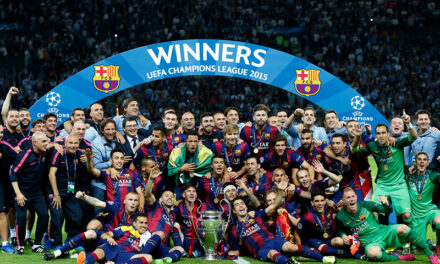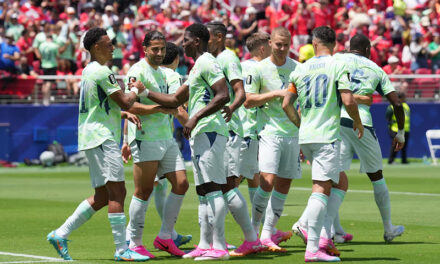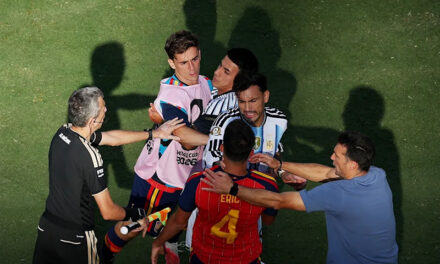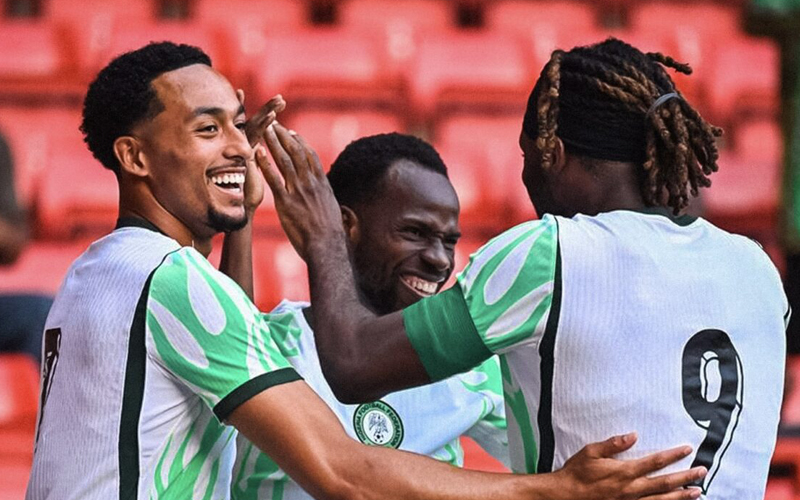
The last four editions of the Unity Cup have been held in London and indeed showcased the beauty of the Afro-Caribbean culture. The significance of this cup extends far beyond the pitch – It is a celebration of black diaspora. It is a tournament that reconnects the black diaspora with their culture, their identity, their roots, and yet fosters a sense of pride and belonging within the UK.
The first ever Unity Cup took place in 2002. That year, only two countries competed in the inaugural edition – Nigeria and Jamaica. The Super Eagles won the first title by defeating the Reggae Boyz 1 – 0. The 2004 format expanded to include the Republic of Ireland. Following 2004, the event remained dormant for nearly 21 years due to logistical challenges behind-the-scenes that made it difficult to sustain the competition as an annual event.
The idea of a planned revival in 2021 was dissolved due to the Covid-19 pandemic. The tournament finally returned in 2025 at Brentford’s Gtech Community Stadium, marking what organisers labelled a “Long journey to revive this important community event”. This edition of the tournament was highlighted by Nigeria’s 5-4 penalty shootout victory over Jamaica following a 2 – 2 draw in the final. The tournament also featured Ghana and Trinidad & Tobago. Ghana was eliminated after a narrow 2-1 defeat to Nigeria while Trinidad and Tobago was knocked out following a 3-2 loss to Jamaica. The two sides eventually met at the Gtech Community Stadium in London for the third-place match, where Ghana secured a convincing 4-0 victory to finish the tournament in third place.
The most recent edition of the Unity ended in yet another glorious triumph for Nigeria. The Super Eagles defeated Jamaica 3-0 in the final match held at The Valley Stadium in London. Alhassan Yusuf scored twice, and Terem Moffi added one goal, sealing Nigeria’s victory. This win solidifies Nigeria’s status as the most successful team in the Unity Cup history. Nigeria has established a legacy of success in the tournament, having won all four editions to date (2002, 2004, 2025, and 2026).
Super Eagles head coach Eric Chelle admits to intentionally using the Unity Cup as an experimental stage to discover and assess new diamonds of Nigerian descent. Chelle views the tournament as a rebuilding tool following the Super Eagles failure to qualify for the North American global showpiece. The Malian prioritised player evaluation over winning the trophy. He named 12 debutants in his 27-man squad that included Nigerian diaspora in Europe. Nigerian diamonds like Millwall’s Femi Azeez and Wrexham’s Arthur Okonkwo were discovered. Femi was the breakout star of the tournament, scoring a brace against Zimbabwe and recorded an assist against Jamaica. Arthur switched his international allegiance from England to Nigeria and other players like Owen Oseni became the first Irish-born player to be invited to the Super Eagles camp.
Other diamonds discovered and fresh faces who made an immediate impact at the tournament included Jamaica’s Courtney Clarke, a 23-year-old midfielder who scored a breath-taking long-range strike in the semi-final over India, and Prince Dube of Zimbabwe who was clinical at the tournament and scored a decisive penalty to secure third place against India.
Nigeria, Jamaica, India, and Zimbabwe became one through the “power of football” and built bonds that can never be broken