Source: @BBC Sport
There is a lot more going on in African football’s dugouts than a routine change of managers.
Twenty-one of the 48 nations entering the group stage of AFCON 2027 qualifying have new coaches. Six of the ten African countries that competed at the 2026 World Cup are also starting this cycle with different men in charge. That makes the current coaching turnover less about isolated appointments and more about a continent-wide reset following the World Cup.
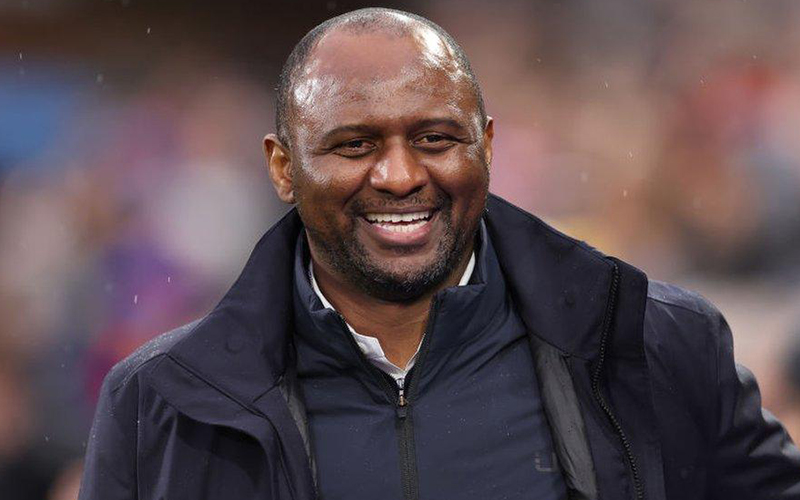
Patrick Vieira is the most recognisable name in that group, but the more revealing story lies in the variety of appointments around him.
Senegal have handed their national team to a coach who was born in Dakar, left for France as a child and went on to win the 1998 World Cup. Vieira has worked in several demanding club environments, including Crystal Palace, Nice and Genoa, but this is his first senior international job.
He is walking into a Senegal side that does not need an identity invented for it. The core already exists. The challenge is deciding how much of what worked under Aliou Cissé and Pape Thiaw should remain, and where Vieira’s ideas need to take the team next.
His first assignment is not gentle. Senegal play Mozambique away on 25 September and Ethiopia four days later. Sadio Mané is absent from the first squad because of a physical issue, although Vieira has indicated that the forward remains available for future selection.
Vieira’s appointment also says something about the changing status of international football as a destination for coaches with major club careers. National teams are no longer simply the place experienced managers go late in their careers. Vieira is entering international management at 50, with his club career still recent enough to influence how his football is viewed.
The returning winners bring a different kind of pressure
Hervé Renard and Aliou Cissé represent another strand of this new group.
Renard is back with Côte d’Ivoire, the country he led to AFCON glory in 2015. Eleven years after that first spell, he returns to a squad that has already begun introducing another generation. Eight players were included in his first squad who had not previously represented the Elephants at senior level.
That makes Renard’s return more than a reunion with a successful past. His previous achievement gives him credibility, but the current team still has to develop its own hierarchy.
Cissé faces an even more interesting test because he has moved away from Senegal altogether. The coach who led the Teranga Lions to their first AFCON title in 2022 is now in charge of Angola, with Egypt their first major test of the campaign.
His appointment illustrates how African national-team coaching has become a continental market in its own right. Coaches who have already succeeded in one country are increasingly being considered for another, taking their knowledge of the competition with them.
Then there is Pitso Mosimane, whose return to South Africa is almost the opposite of Cissé’s move.
Mosimane is back with Bafana Bafana for a third spell, having last held the permanent position in the early 2010s. His record in African club football is extensive, including three CAF Champions League titles, and he inherits a side that reached the knockout stage of the 2026 World Cup under Hugo Broos.
His first squad is revealing. Five players received maiden senior call-ups, while Cassius Mailula and Luther Singh returned to the national setup. Mosimane has therefore resisted simply rebuilding around the players he already knows.
That is where the new generation of AFCON coaches will ultimately be judged. A managerial appointment can generate excitement for a few weeks. International football is far less forgiving once competitive fixtures begin.
Tunisia offer another example. Mouine Chaâbani has taken over after the World Cup, retaining only 14 members of the tournament squad while recalling established internationals such as Ferjani Sassi, Aïssa Laïdouni and Ali Maâloul and introducing new players.
The scale of that change shows how quickly a national team can move from one cycle into another.
Claude Le Roy represents the other end of the spectrum. At 78, he is returning to Congo for a second spell and his 12th national-team appointment. His nine AFCON tournament appearances remain a competition record, as do his 38 matches at the finals.
The contrast with Vieira could hardly be greater. One is beginning his first senior international assignment; the other has spent decades moving through African football’s national-team landscape.
Yet both are operating in the same qualifying system, where 48 teams have been divided into 12 groups and the route to the 2027 finals is already underway. Kenya, Tanzania and Uganda qualify automatically as hosts, leaving one additional qualifying place from each of their groups.
That format adds another layer to the coaching changes. There is limited room for a manager to spend an entire international cycle experimenting. Squad selection, tactical decisions and results are immediately connected because there are only a handful of competitive windows in which to establish a team.
The new AFCON coaches therefore represent more than a collection of famous names and returning winners. They mark a collision between experience and reinvention.
Vieira has to translate an illustrious playing career and years of club management into international football. Mosimane has to prove that a coach returning to familiar territory can still introduce new ideas. Renard and Cissé are taking previous AFCON success into different environments, while Le Roy is drawing on a record few coaches can match.
The fascinating part of this cycle is that Africa has not settled on one model. It is testing several at once. That makes the 2027 qualification campaign as much a referendum on coaching choices as it is a route to the tournament itself.