Source: @Fox Sports
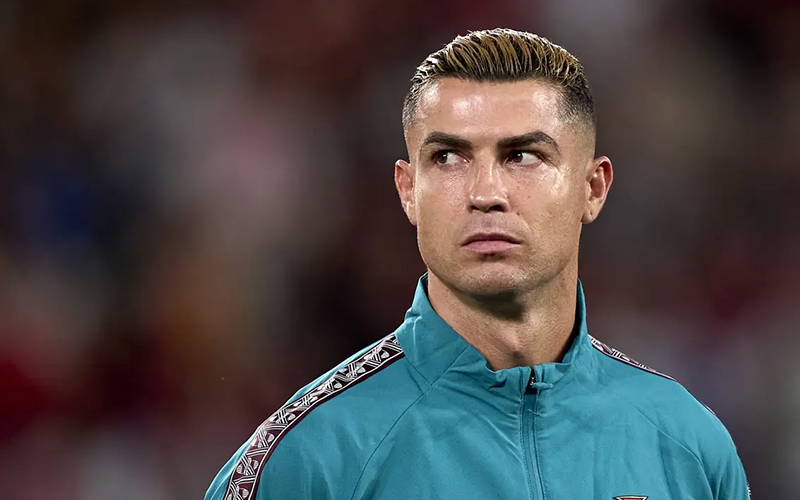
Cristiano Ronaldo has received a 30-day suspension from Portugal after leaving the national team camp amid a dispute over his role in the squad, bringing a disciplinary issue involving one of football’s most decorated players closer to its conclusion.
The Portuguese Football Federation (FPF) announced the punishment on Monday, alongside a fine of €255. Ronaldo has received the minimum suspension available under federation regulations, which allow bans ranging from one to six months for players who leave the national team without authorisation.
At 41, Ronaldo remains Portugal’s record international goalscorer and appearance-maker. His standing in the game, however, does not exempt him from the obligations attached to representing his country. The decision reinforces the principle that selection disputes must be handled through the team’s established structures rather than personal declarations or unilateral departures.
Ronaldo had already apologised to supporters on 6 October, acknowledging his mistake and accepting that disciplinary action could follow. The FPF committee cited his remorse as a factor in its decision.
A dispute over playing time becomes a disciplinary issue
The disagreement developed after Ronaldo warmed up as a substitute against Norway on 27 September but was not introduced. He subsequently learned that he would not start Portugal’s match against Denmark on 1 October, prompting him to leave the camp on 30 September.
Ronaldo later accused coach Jorge Jesus of going back on an agreement about his involvement. He also claimed the coach had failed to address points they had discussed privately during a press conference ahead of the Denmark fixture. Ronaldo maintained that he was not retiring from international football and remained available for selection.
Jesus responded that he would consider Ronaldo for Portugal duty if the forward continued playing for Al Nassr and wanted to represent his country.
From a football management perspective, the dispute exposed the tension between a veteran superstar’s expectations and a coach’s authority over selection. Ronaldo’s career gives him an extraordinary standing within Portuguese football, but that status cannot guarantee minutes on the pitch. Coaches must retain the freedom to select players according to their plans, even when those decisions involve the team’s most celebrated figure.
Ronaldo’s response also created a disciplinary issue that extended beyond the original disagreement. Leaving camp placed an individual grievance above the team’s immediate commitments, giving the federation grounds to intervene regardless of his contribution to Portuguese football.
The suspension took effect from the Denmark match, meaning Ronaldo had already served 19 days when the FPF announced its decision. He is therefore due to complete the ban by the end of October, leaving him eligible for Portugal’s November fixtures against Denmark on 14 November and Wales on 17 November.
Portugal have also managed to progress without him during this period, winning all four of their Nations League matches and securing a place in the quarter-finals with two group games remaining.
That run gives Jesus room to maintain his selection principles without sacrificing results. Ronaldo’s return will still offer Portugal a formidable attacking option, but restoring him to the squad will require the dispute to remain behind them.
Following the federation’s announcement, Ronaldo posted a photograph of himself preparing to train with Al Nassr, captioned “Putting in the work”. He offered no direct public response to the punishment.
The suspension closes the immediate disciplinary case, but the longer-term test will be whether Ronaldo and Jesus can maintain a productive working relationship. Portugal benefit most when their leading scorer contributes on the pitch, while the national team needs a selection policy that applies to every player, regardless of reputation.