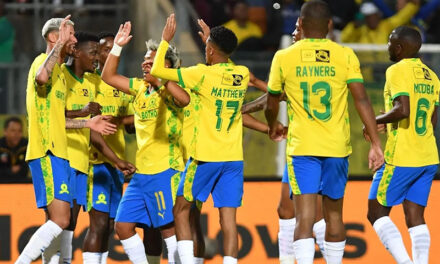
Ronaldo’s frustrating display against Congo DR isn’t the first he has had in recent years as Portugal’s main center forward. But does his past performance at this level mean he should automatically start all summer long?@Hakan Akgun/Anadolu via Getty Images
HOUSTON — Ronaldo’s 2026 World Cup opener raised more questions than answers, as Portugal’s ageing superstar cut a peripheral figure against DR Congo in Houston. After a picture-perfect beginning, Portugal was rendered mostly ineffective for the final 80 minutes against DR Congo, coming away with only a 1-1 draw in a 2026 World Cup match where they were heavily favored. It was the fourth time in five World Cups that Portugal failed to win its opening fixture, sparking another referendum on the enigma that is Cristiano Ronaldo at this level.
A Tale of Two Halves
João Neves’ early header gave Portugal the lead, finishing a dominant six-minute sequence where they completed 84 passes to their opponents’ 12. However, DR Congo quickly played their way into the match. They equalized late in the first half via a set-piece goal from Yoane Wissa and ultimately finished the game with more shot attempts (eight to seven), more shots on goal (two to one), and a higher expected goals (xG) metric (0.82 to 0.64).
Portugal was limited to just six shot attempts after Neves’ goal. Even as key creative players like Bernardo Silva, Pedro Neto, Nuno Mendes, and Vitinha were withdrawn by head coach Roberto Martinez, the 41-year-old Ronaldo remained on the pitch for the full 90 minutes.
The Statistical Dilemma
In the first game of his record sixth World Cup—and less than 24 hours after Kylian Mbappé, Erling Haaland, and Lionel Messi all enjoyed multi-goal performances—Ronaldo was notably quiet. He managed just three shot attempts and zero chances created, struggling to find any physical advantages against the Congolese defenders and frequently drifting wide of the goal to find space.
Martinez largely deflected questions regarding Ronaldo’s role, pointing instead to the team’s overall lack of service.
“It became a different game after we scored the first goal,” Martinez said post-match. “We didn’t reach the final third at the level we needed in order to provide service to the striker and make use of his movements. It makes no sense to get the best goal scorer in world football out in a game when you need goals.”
Meanwhile, DR Congo coach Sébastien Desabre praised his squad’s resilience, comparing the performance to their gritty qualification run. “I know my players are capable of resetting themselves mentally and reacting in the right way to put the team back on the right track after a difficult beginning,” he noted.
The Search for Plan B
Even the greatest players experience poor matches, but this marks the continuation of a troubling trend. Since scoring a penalty against Ghana in 2022, Ronaldo has gone 10 straight matches in major international tournaments without a goal. It has been almost five years since his last open-play goal in a World Cup or European Championship.
While Ronaldo’s historic brilliance is undeniable, his recent output raises questions about Portugal’s tactical flexibility. Tellingly, when backup center forward Gonçalo Ramos came on in the 83rd minute against DR Congo, he replaced Vitinha, a midfielder, rather than Ronaldo.
There was a time when Ronaldo had a legitimate claim to being the most dangerous forward on the planet. But if Portugal hopes to make a deep run in 2026, Martinez must find a way to maximize his aging superstar’s output—or finally develop a viable Plan B for when the goals dry up.