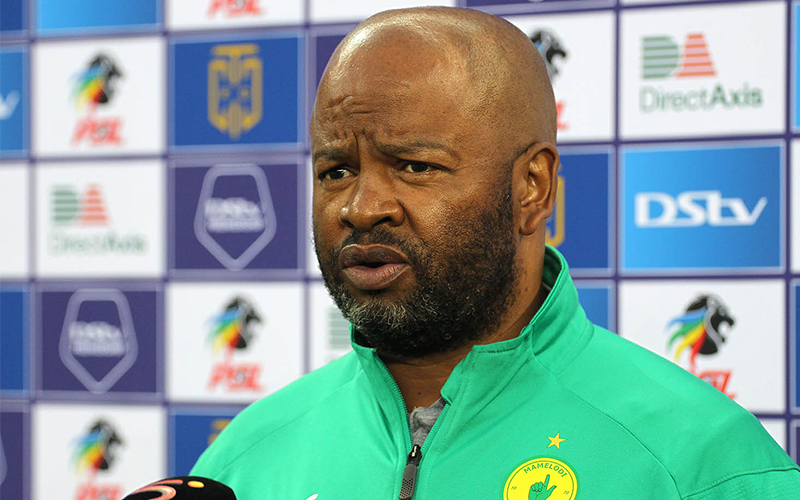
Source: @Mamelodi Sundowns FC
South African football coaches are earning opportunities across the continent, but Manqoba Mngqithi believes the Premier Soccer League could pay a price for their growing presence abroad.
The Young Africans head coach has watched several of the country’s most experienced tacticians leave the Betway Premiership for positions in other African leagues. While their appointments reflect the standing of South African coaching, Mngqithi questions whether domestic football can maintain its technical standard as that expertise moves elsewhere.
His concern goes beyond the number of local managers working overseas. He believes the PSL risks losing people who have helped raise coaching standards, develop players and introduce new tactical ideas to the domestic game.
The departure of these coaches gives them access to different football environments and new professional challenges. However, their individual progress does not automatically translate into progress for South African football.
The PSL risks losing more than experienced managers
The recent Kariakoo Derby in Tanzania offered a striking example of South African coaching talent competing at the highest level of the local game. Mngqithi’s Young Africans lost 2-1 to Steve Barker’s Simba SC after Barker’s side fought back to secure victory.
Both coaches have established reputations in South Africa. Barker helped Stellenbosch FC become a competitive force in the Premiership, while Mngqithi has won domestic honours and built extensive experience at leading clubs. Their meeting demonstrated how South African tactical expertise is gaining recognition beyond the country’s borders.
Rhulani Mokwena, Fadlu Davids and Benni McCarthy are among the other prominent names pursuing coaching opportunities elsewhere. Their appointments give South African football a wider presence across the continent, but the domestic league must still account for their absence.
Mngqithi’s warning raises a question about succession. If experienced local coaches continue moving abroad, the PSL needs a strong pipeline of younger managers capable of taking on demanding senior roles. Simply promoting coaches without sufficient preparation could leave clubs struggling to maintain tactical standards and develop players consistently.
Foreign coaches can contribute valuable expertise to South African football, and their presence should not be treated as a problem in itself. The concern arises if local clubs become increasingly dependent on overseas appointments while home-grown coaches seek opportunities elsewhere.
South African football has spent years building a reputation for producing capable technical minds. Keeping that progress alive requires more than celebrating their achievements abroad. Domestic clubs must give local coaches credible opportunities, professional support and reasons to build their careers at home.
Mngqithi sees a double-edged sword: individual success for South African coaches, alongside a possible decline in the league that helped establish their reputations. If the PSL fails to address that imbalance, it could end up cutting off its nose to spite its face.