Source: @VERSUS/Instagram
Die Mannschaft‘s final outing in Adidas stripes produced a result worthy of the occasion. Germany’s 5-0 demolition of the Netherlands in Berlin on 16 November brought a 72-year association with the German sportswear manufacturer to an emphatic end. Few sponsorship partnerships in international football have lasted so long or become so closely linked to a country’s sporting identity. Yet commercial value has ultimately taken precedence over national heritage, with Nike set to become the German Football Association’s (DFB) equipment supplier in January 2027.
The victory also secured Germany first place in their UEFA Nations League group and a place in the quarter-finals. Derry Scherhant opened the scoring in the 41st minute, but the second half belonged to Florian Wirtz. The midfielder scored twice, while Nico Schlotterbeck and Brajan Gruda added further goals to complete a comprehensive win.
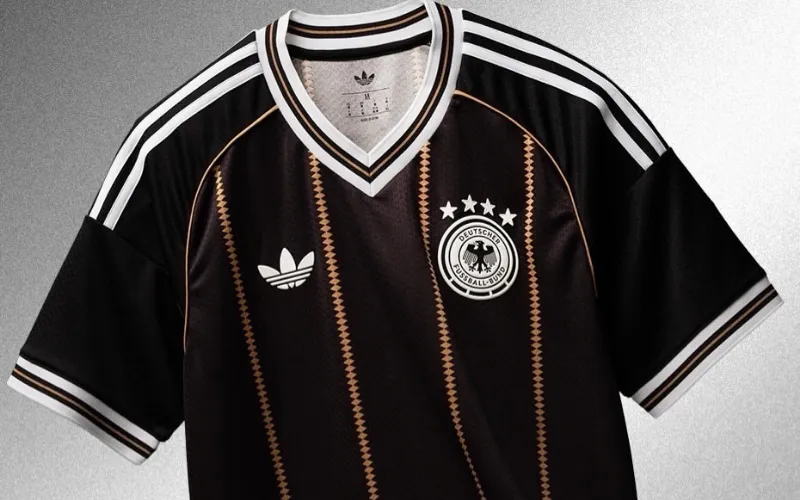
The team wore a specially designed black-and-gold kit featuring Adidas’ Trefoil logo. It was a fitting farewell for a manufacturer whose three stripes have accompanied German football through decades of international success.
Nike’s Financial Offer Brings a Historic Partnership to an End
The relationship between Adidas and German football began in 1954, when founder Adi Dassler supplied boots for West Germany’s World Cup campaign. The team’s victory over Hungary in the final, famously remembered as the Miracle of Bern, became one of the defining moments in the country’s sporting history.
Adidas subsequently remained associated with Germany through four men’s World Cup victories in 1954, 1974, 1990 and 2014. The women’s national team also won two World Cups in Adidas equipment, in 2003 and 2007. Few manufacturers can claim such an extensive record with a single national football association.
The DFB’s March 2024 announcement of its agreement with Nike therefore provoked considerable criticism. Adidas is a German institution, and its association with the national team represented more than a commercial arrangement. The decision also carried political and cultural implications, with critics questioning why Germany would replace a domestic manufacturer with an American rival.
The financial case, however, proved decisive. European media reports value Nike’s eight-year agreement, which runs until December 2034, at approximately €100 million (R1.86 billion) annually. That is almost double Adidas’ estimated yearly payment of €50 million (R932 million). The DFB has declined to confirm the figures, citing confidentiality obligations.
The federation maintains that the additional income will help fund German football’s extensive grassroots structure, which includes more than 24,000 clubs and approximately 7.3 million members.
Nike has therefore sealed the deal on financial grounds, while Adidas leaves behind a legacy that few equipment manufacturers could rival. Die Mannschaft’s final victory provides a fitting end to an association that helped define German football for generations.