Source: @CAF Online
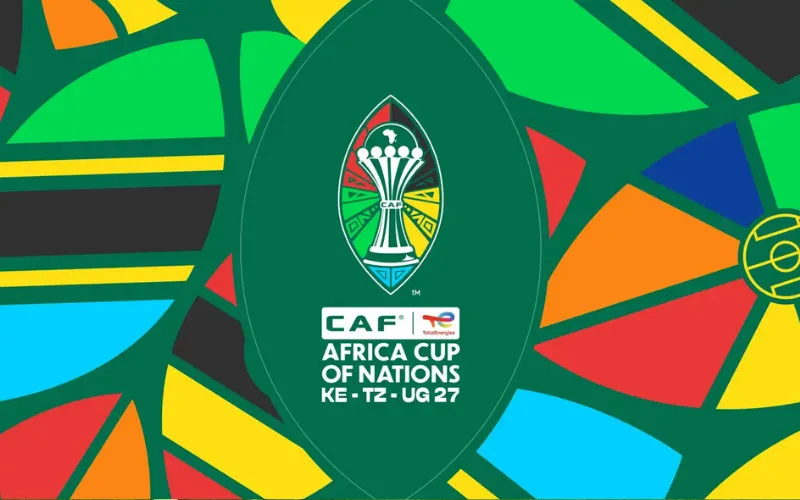
The 2027 AFCON logo places the cultural identities of Kenya, Tanzania and Uganda at the centre of preparations for a tournament that will break new ground in African football. CAF unveiled the official branding on 19 November 2026, giving the first three-country AFCON a visual identity that draws directly from the heritage shared by its hosts.
Named TotalEnergies CAF AFCON PAMOJA 2027, the competition will kick off on 19 June 2027, with 212 days remaining at the time of the unveiling. The simultaneous launch across all three countries marked the first public presentation of a brand built around a central idea: three national identities represented within one continental football event.
The choice of the shield is central to that ambition. It features in the national coats of arms of all three host nations, making it one of the few traditional symbols with an established connection to Kenya, Tanzania and Uganda. Its inclusion gives the tournament a cultural reference that belongs to the region, not just to its organisers.
The shield connects three national identities
The emblem takes the form of two intersecting circles of equal radius, with the AFCON trophy positioned at its centre. An outline of the African continent sits above the trophy, while decorative details draw on traditional beadwork, textiles and geometric patterns associated with East African craftsmanship.
The composition places African football within a recognisable regional setting. The trophy remains the focal point, but the shield gives it a cultural context that reaches beyond the competition itself. For a tournament spread across three countries, this is an ambitious branding decision: the hosts need common ground without reducing their individual identities to a single national aesthetic.
Colour plays an equally deliberate role in the 2027 AFCON logo. Red and black appear at the top of the shield, green and yellow flank the trophy, and blue completes the lower section. Together, these colours reference the national identities of the three hosts without assigning the emblem to one country.
CAF has also introduced 12 additional shield patterns to give each nation its own visual expression. Kenya’s designs feature horizontal bands, Tanzania’s incorporate diagonal lines inspired by its flag, and Uganda’s include warm colours alongside the crested crane.
This wider collection gives the tournament’s branding room to adapt across stadiums, digital platforms and promotional material. Each host can put its own stamp on the competition while retaining a recognisable connection to the shared identity.
PAMOJA means ‘Together’ in Swahili, a language widely spoken across the three countries. The name reinforces the partnership behind an AFCON that will require close coordination across national borders, venues and organising structures.